
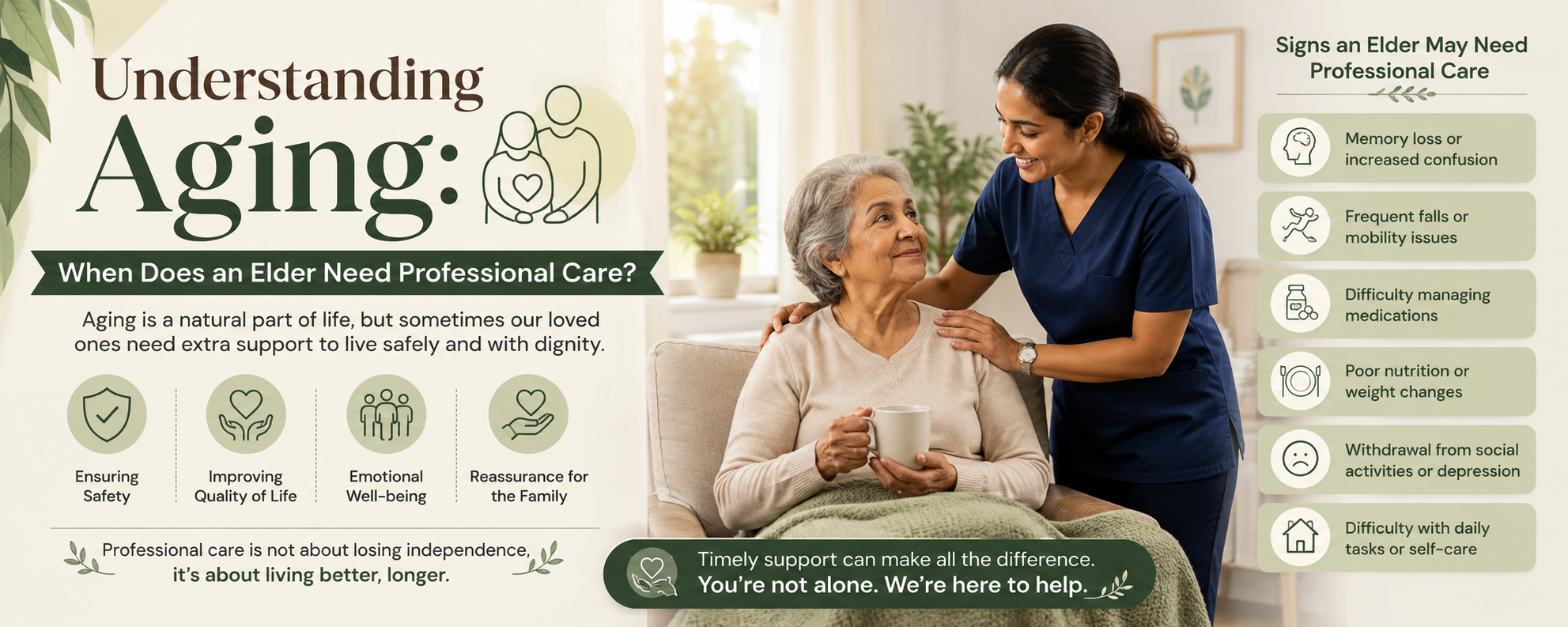
Aging is not a single event — it is a gradual process that touches the body, the mind and the emotions in different ways for every individual. For families caring for an elderly parent or relative, one of the hardest questions is knowing when ordinary home support is no longer enough, and when it is time to bring in professional care.
The Physical Signs
Physical decline often shows up first: reduced mobility, frequent falls, difficulty with bathing or dressing, unexplained weight loss, or repeated hospital visits for the same underlying condition. When an elder starts needing help with more than one activity of daily living — eating, walking, toileting, medication — on a regular basis, this is usually the point where family caregiving alone becomes difficult to sustain safely.
The Cognitive Signs
Cognitive changes can be subtler. Forgetting recently taken medication, getting confused about time or place, repeating questions, or sudden changes in judgment and personality are signs that deserve a proper medical evaluation — not dismissal as “normal old age.” Conditions like dementia, Alzheimer’s and Parkinsonism progress gradually, and early, structured support makes a real difference to stability and quality of life.
The Emotional Signs
Aging can also bring loneliness, anxiety and a loss of purpose — especially when an elder lives alone, has lost a spouse, or sees children settled far away. Withdrawal from conversation, loss of interest in food or hobbies, or persistent low mood are emotional signals that are just as important as physical ones.
When Family Care Reaches Its Limit
Most families want to care for their elders at home, and that instinct is a good one. But professional care becomes necessary when:
- The elder needs supervision or nursing support around the clock
- Family caregivers are also managing jobs, children or their own health, and are stretched thin
- The medical condition requires trained monitoring — wound care, tube feeding, mobility assistance, medication schedules
- There have been repeated falls, emergencies or hospital readmissions
- The elder is increasingly isolated and would benefit from structured company and activity
Recognising this moment is not a failure of family love — it is often the most loving decision a family can make, because it ensures the elder receives consistent, qualified, dignified care rather than care that is well-intentioned but stretched too thin.
At Jeevan Suraksha, we have supported families across Central India for over 14 years, helping more than 1,500 seniors receive the structured medical, nursing and emotional support their stage of life needed. If you are unsure whether it is time, our team is happy to simply talk it through with you.
Talk to Our Care Team
Every family’s situation is different, and the right kind of care depends on the individual’s medical condition, daily needs and home circumstances. If you are trying to work out what level of support your loved one needs, our care team at Jeevan Suraksha is here to listen first and advise honestly — with no pressure.
Call our helpline: +91 94221 02740 | Email: info@jeevansurakshaindia.com
Plot No. 43, Lendra Park Corner, Ramdaspeth, Nagpur – 440010, Maharashtra, India